
From sneaking out to play jazz as a teenager to mentoring generations of Indianapolis musicians, trumpeter Clifford Ratliff has spent a lifetime keeping the city’s musical heritage alive.
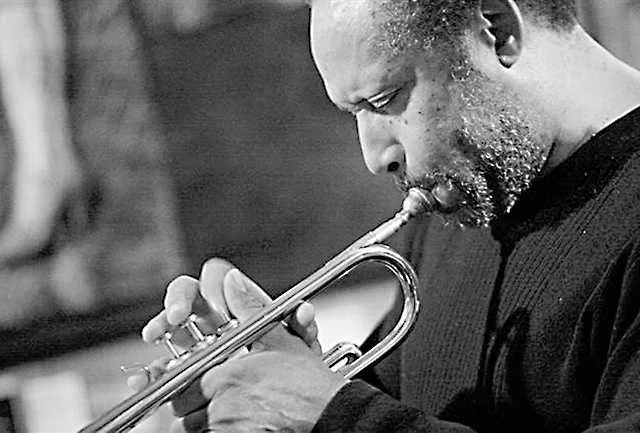
As a teenager growing up in Indianapolis, Clifford Ratliff had a secret. While his parents thought he was attending house parties, he was actually performing in the jazz clubs along Indiana Avenue. He would hide his trumpet in the family’s coal shed, head out to play, and make sure he was home before his 11 p.m. curfew.
“Had my parents known that I was playing on Indiana Avenue, they’d have killed me!” Ratliff later recalled.
It was the beginning of a remarkable musical journey, one that would take him around the world and eventually bring him back to the Indianapolis jazz community that helped shape him.
Growing Up on Indiana Avenue
Born in 1947, Ratliff grew up surrounded by music. Everyone in his family played an instrument, and he and his three older brothers shared a cornet left behind by a cousin. When his brothers lost interest, Clifford claimed the instrument for himself. His musical education continued at School 23, where he studied with Reggie DuValle, Willis Kirk, and Al Officer, and later at Crispus Attucks High School.
But some of his most memorable lessons happened outside the classroom.
In the early 1960s, legendary Indianapolis-born trumpeter Freddie Hubbard returned to perform in the city. Ratliff was too young to enter the club, so he found another way to listen. Standing in the alley behind the building, near a window and exhaust fan, he listened to Hubbard play. For the young trumpeter, hearing one of his musical heroes perform—even from outside—was unforgettable. It strengthened his determination to pursue a life in jazz.
A Community Built Around Music
During the 1950s and 1960s, Indiana Avenue was the center of Indianapolis’s thriving Black jazz community. Clubs like the Hubbub, the 19th Hole, the Honeydripper, and Al’s British Lounge provided places for musicians to perform, collaborate, and learn from one another. Afternoon performances often stretched into evening shows, and jam sessions became informal classrooms where younger musicians could learn alongside seasoned professionals.
By his teenage years, Ratliff was performing regularly on the Avenue, including with the Indianapolis-based band The Highlighters. His career eventually took him far beyond Indiana. He joined the U.S. Air Force and toured with the Air Force Band, performing in USO shows. He also traveled internationally, including recording in Haiti with the Magnum Band.
When he returned to Indianapolis in 1970, he continued performing with some of the city’s most respected jazz musicians, including Jimmy Coe, Alonzo “Pookie” Johnson, Russell Webster, and Melvin Rhyne. Over the decades, Ratliff has led his own big band, hosted jam sessions at The Jazz Kitchen, and mentored countless younger musicians.
Remembering What Was Lost
Ratliff’s memories of Indiana Avenue aren’t limited to the music. He also remembers the changes that transformed the neighborhood.
For decades, segregation had concentrated much of Indianapolis’s Black cultural and entertainment life along the Avenue. When integration opened doors to other venues, Black-owned clubs faced new competition and changing audiences. Over time, declining business, disinvestment, and demolition contributed to the disappearance of much of the district.
Today, many of the places where Ratliff learned his craft no longer exist. His experiences offer a window into a community where music was more than entertainment. It created opportunities, brought people together, and helped young musicians find their voices.
Bringing Indiana’s Stories to Life
On Thursday, October 29, Ratliff’s story will be part of American Voices, Indiana Stories, a special performance by Crossroad, the chamber ensemble of the Indianapolis Men’s Chorus. Presented at the Indiana Historical Society, the concert celebrates Indiana’s contributions to American music as part of the nation’s 250th anniversary.
Curated and directed by Joseph Perkins Jr., the program combines live music, historical storytelling, and a lively, late-night talk-show-inspired format. Butler University historian Dr. Nicholas Johnson will serve as host, guiding audiences through the artists and musical traditions that have shaped Indiana’s cultural identity.
Ratliff’s participation will give audiences an opportunity to hear from someone who experienced one of the city’s most remarkable musical eras firsthand. For the Indianapolis Men’s Chorus, the project is an opportunity to celebrate Indiana’s musical contributions while preserving stories that might otherwise be forgotten.
Experience American Voices, Indiana Stories
Thursday, October 29, 2026 | 7:30 p.m.
Basile Theater at the Indiana History Center
450 W. Ohio Street, Indianapolis
Tickets are $15. Admission is free for Indiana Historical Society members.
Tickets can be purchased here.